
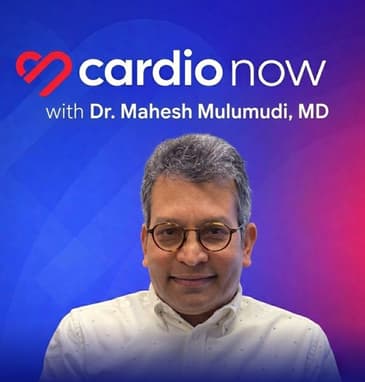
Welcome to the debut episode of CardioNow, where we rethink everything you know about heart disease and prevention. Hosted by nationally recognized interventional cardiologist Dr. Mahesh Mulumudi, this episode dives into why heart disease often develops quietly and why waiting for symptoms is a risky mistake.
Dr. Mahesh Mulumudi breaks down the latest science, reveals surprising myths like why “normal” cholesterol doesn’t always mean you’re safe, and spotlights the technology and screening tools changing the game for early detection.
Whether you’re in your 30s or 40s, Dr. Mahesh Mulumudi shares actionable tips for personalized prevention, emphasizing that genetics and individual risk matter more than ever. If you’re ready to take control of your long-term health before symptoms start, this episode is your starting line.
Timestamps:
00:00 Early Onset of Atherosclerosis
04:31 "Atherosclerosis and Early Prevention"
07:05 LDL Particle Number & Size
11:43 Advanced Coronary CT Diagnostics
17:03 "Cardio Prevention Insights Podcast"
17:48 "Podcast Series with Dr. Mulumudi"
Rethinking Heart Disease: Early Prevention and New Technologies in Cardiovascular Care
The Shift in Heart Disease Prevention
In the inaugural episode of CardioNow, Dr. Mahesh Mulumudi opens up a vital conversation about the future of cardiovascular care. The episode sheds light on why waiting for symptoms before addressing heart health is an outdated and risky approach. Heart disease continues to be the leading cause of death worldwide, but as Dr. Mahesh Mulumudi emphasizes, the condition often begins developing decades before any symptoms appear. Traditionally, most people did not consider heart disease until they reached their forties or older. However, research and clinical insights have completely changed this perspective, making early prevention the new standard in heart health.
Debunking Common Myths About Heart Disease
One major takeaway from this episode is the debunking of several long-held myths about heart disease. For example, many assume that having normal or low cholesterol equates to a clean bill of health. As Dr. Mahesh Mulumudi points out, cholesterol "normals" are defined by population studies and may not be normal for you as an individual. Personalized care is essential, and a cholesterol level that appears normal for the population might actually be risky based on your genetics or metabolism. This shift toward individualized medicine marks a significant departure from traditional one-size-fits-all healthcare.
How Heart Disease Starts Early
Surprisingly, evidence shows that heart disease can begin in childhood or adolescence. Autopsy studies from the 1990s of young individuals aged 15 to 34 who had no known heart disease found that many already had early markers of atherosclerosis, specifically fatty streaks and plaque buildup in their arteries. Thirteen percent even had advanced atherosclerosis at the time of death, proving that heart issues can start much earlier than most people realize. These findings underline the urgency of screening for heart disease risk earlier in life and not just in older populations.
Going Beyond Cholesterol Tests
While cholesterol screening remains important, the episode dives into why it is not enough. Dr. Mahesh Mulumudi advocates for advanced lipid fractionation that goes beyond total cholesterol numbers. Through more detailed testing, doctors can analyze LDL and HDL particle numbers and sizes, which provide a clearer picture of heart disease risk. Small, dense LDL particles are especially dangerous, moving more easily into artery walls and promoting plaque formation compared to larger, fluffier LDL particles.
The Power of New Screening Tools and AI
The evolution of technology has empowered patients and clinicians to detect cardiovascular risk much earlier. One of the most promising innovations discussed is the coronary CT angiogram, a non-invasive imaging tool that can identify the presence, volume, and risk level of arterial plaque in the heart. Combined with artificial intelligence tools, these scans now deliver detailed analysis that was previously impossible or required invasive procedures. This technological advancement enables truly proactive prevention, rather than reactive treatment after symptoms develop.
Personalized vs. Guideline-Based Care
The conversation highlights the importance of personalized prevention in cardiology. While guidelines provide a useful framework, Dr. Mahesh Mulumudi asserts that individual risk factors must be considered to deliver optimal care. This can include looking at genetic markers such as Lipoprotein A, which is not always checked in standard screenings but is a significant inherited risk for cardiovascular disease. The new model of preventive cardiology is about customizing prevention and treatment plans based on each person’s unique profile.
Steps Everyone Should Take for Heart Health
For those under 35, early cholesterol and advanced lipid testing are critical. For individuals over 40, a coronary CT angiogram can offer invaluable insights into heart health. Lifestyle changes that maintain healthy glucose levels and prevent metabolic syndrome play an equally crucial role.
Empowering Listeners for a Healthy Future
The core message of the episode is empowering listeners to take control of their heart health through knowledge and early action. Rather than accepting heart disease as an inevitable part of aging, listeners are encouraged to be proactive, get screened early, and discuss more advanced risk assessments with their healthcare providers.
Follow CardioNow for more in-depth discussions on the latest in cardiovascular prevention and technology, and take steps today for a heart-healthy tomorrow.
Dr. Mahesh Mulumudi LinkedIn - https://www.linkedin.com/in/mahesh-mulumudi-1ba8733
CardioNow - https://www.cardionow.org/about-us/our-providers/mahesh-mulumudi-md-facc-fscai/
CardioNow YouTube - https://www.youtube.com/@CardioNowPLLC
TopHealth Media Network - https://tophealth.care/
Disclaimer: Informational only. Not medical advice. Consult your doctor for guidance.”